
 Arabic
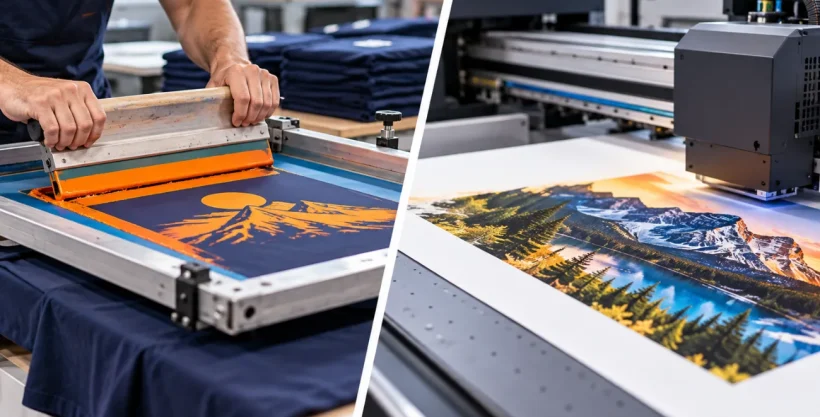
Sharjah’s Industrial Area 4 is home to more print shops than most people realize, and the question that comes up in nearly every one of them is the same: digital printing vs screen printing, which one actually suits your order? The answer depends less on which method sounds more modern and more on what you’re printing, how many pieces you need, and how long you want the branding to last.
Al Fajer Advertising Gifts Trading LLC, based in Sharjah and serving Dubai, Abu Dhabi, and Al Ain, works with both methods daily across its in-house production floor. That direct exposure to both processes, side by side, on the same order sheets, gives a clearer picture than most guides written from a single-technique perspective.
How Does Screen Printing Actually Work?
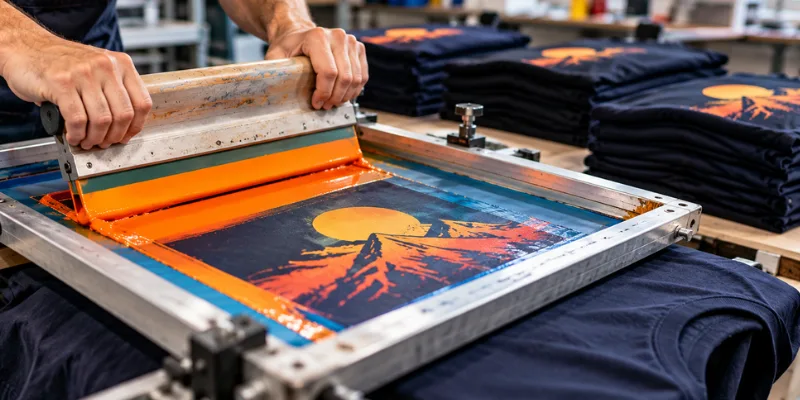
Screen printing pushes ink through a fine mesh stencil, one color layer at a time, directly onto the surface of a product. Al Fajer’s commercial screen printing service is built around this exact process, applied to apparel, packaging, and bulk promotional items. Each color needs its own screen, which means a five-color logo takes five separate passes. That sounds slow on paper. In practice, once the screens are set up, output speed for large quantities is hard to beat.
This is where the digital printing vs screen printing comparison starts to matter for budget planning. Screen printing carries a setup cost tied to preparing each screen, so a 50-piece order and a 5,000-piece order don’t scale in price the same way. The per-unit cost drops sharply as volume rises, which is why event organizers ordering thousands of branded mugs or shirts for a single campaign usually lean in this direction.
Color and texture also set screen printing apart. The metallic finishes, glitter effects, and raised or textured prints are possible because the ink sits on top of the material rather than soaking into it. Dark-colored fabrics take screen printing well too, since opaque inks sit visibly on the surface instead of blending into it.
Where Digital Printing Takes Over
Digital printing works from a different starting point entirely. There’s no stencil and no per-color setup. A design file goes straight from computer to printer, which is why Al Fajer’s digital printing service handles brochures, business cards, banners, and marketing collateral with fine gradients and photographic detail. Anything with more than a handful of colors, subtle shading, or a design that changes from one piece to the next fits naturally into a digital workflow.
Short runs are where digital printing earns its keep. A batch of 20 personalized items, a one-off proof, or a rush order with a same-week deadline all move faster through digital equipment because there’s no screen preparation stage to wait through. The trade-off shows up at higher volumes, where per-piece costs stay relatively flat instead of dropping the way screen printing costs do.
Surface compatibility differs too. UV and digital methods handle flat, rigid materials such as acrylic, wood, and metal with strong precision, which suits corporate awards, signage, and branded office items rather than flexible garments in bulk.
Digital Printing vs Screen Printing: How to Choose?
A few practical questions usually settle the decision. How many units does the order need? Screen printing wins as quantity climbs past a few hundred pieces. Does the design carry gradients, photography, or more than four colors? Digital printing reproduces that detail more faithfully. Is the item flat and rigid, like a plaque or acrylic sign, or fabric-based, like a polo shirt or tote bag? That distinction alone often points to the right process before cost even enters the conversation.
Turnaround time matters just as much for businesses working against event dates. Screen printing needs lead time for screen preparation, so last-minute requests favor digital output. According to PRINTING United Alliance, the trade body representing the digital and screen printing industry across North America, both technologies continue to serve distinct, non-overlapping niches in commercial production rather than one replacing the other. PRINTING United Alliance supports the digital and screen printing community in the USA and Canada by providing services and activities specific to their interests. That framing holds true globally: the two processes solve different problems rather than competing for the same job.
Material durability plays into the decision as well. Screen-printed ink tends to sit thicker and more opaque on the surface, which explains its long history with apparel meant for repeated washing. Digital prints, particularly on rigid substrates through UV curing, hold up well against fading and scratching when applied correctly, which is why signage and desk items are frequently produced this way.
Final Thoughts
Neither method is the universal answer to promotional branding. Screen printing serves bulk orders, bold colors, and textured finishes. Digital printing serves detailed graphics, short runs, and quick turnarounds on rigid materials. The right call comes down to matching the technique to the product, the quantity, and the deadline in front of you. What does your next order actually need: volume and texture, or detail and speed?